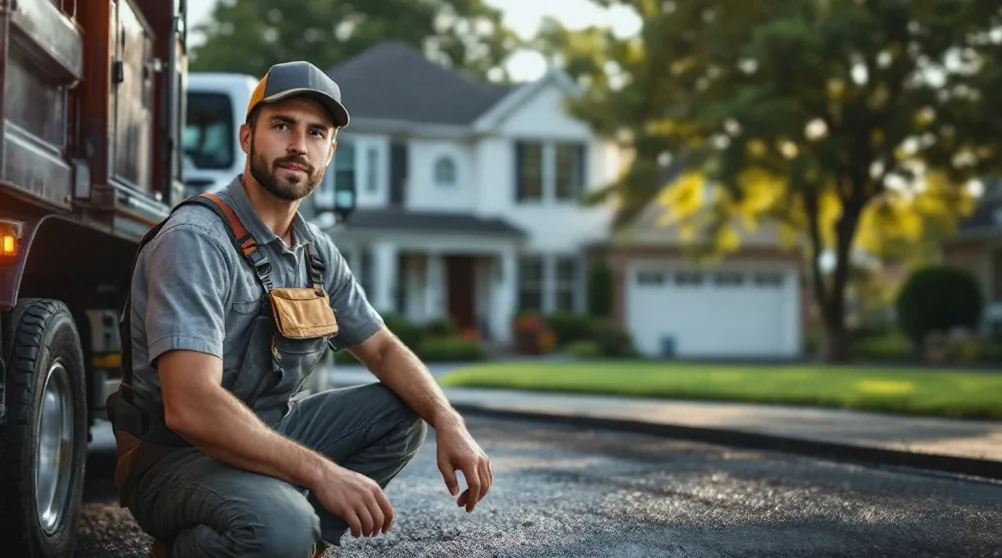
Quick answers on Asphalt Paving in Huntsville
Asphalt paving in Huntsville typically costs $4,897 for a standard driveway, but the final price depends on size, base condition, and access. Most residential jobs take one to two days, and the new surface is ready for foot traffic within 24 hours. Here's what you need to know before you call.
The average cost to pave a driveway in Huntsville is $4,897. (angi.com) That figure covers a typical two-car driveway with decent existing base. If your driveway is longer, wider, or on a slope, expect the number to climb. We'll always give you a firm quote after looking at the site, not a guess over the phone.
Timing matters more than most homeowners think. Asphalt needs warm weather to compact properly, so the paving season here runs roughly April through October. We've laid asphalt in March on a warm stretch, but it's risky. Cold mix used for winter patches won't give you the same smooth, durable surface.
The process itself isn't complicated. We remove the old surface if needed, grade and compact the base, then lay hot mix asphalt and roll it smooth. Most residential driveways are done in a day or two. The key is what's underneath. A good base is what keeps your driveway from cracking and sinking later.
- Average cost: $4,897 for a typical driveway (angi.com)
- Season: April to October for best results
- Timeline: 1 to 2 days for most homes
- Ready for cars: 48 to 72 hours after paving
Short version
- Plan on $4,897 for a standard driveway, but get a site-specific quote. (angi.com)
- Pave in warm weather, not winter.
- What's underneath matters more than the top layer.
- Expect the job done in one to two days.
What drives the price of an asphalt driveway
Size is the biggest factor, but the condition of your existing base and how easy it is to get equipment to the site matter just as much. A straight, flat driveway on solid ground is the cheapest to pave. Add a steep slope, poor drainage, or a narrow access, and the price climbs.
The $4,897 average assumes a straightforward job. (angi.com) If your driveway is longer than the typical 600 square feet, you'll pay more per square foot. If the old asphalt is crumbling, we have to tear it out and haul it away, which adds labor and disposal fees.
Subgrade preparation is where hidden costs appear. Huntsville's red clay expands and contracts with moisture, so a proper base of crushed stone is required. If we dig down and find soft spots, we need to remove the bad soil and bring in fill. That's not something we can see until the old surface is up.
Access is another cost factor. A wide, open driveway lets our dump truck back right up to the job. A narrow driveway with a gate means we use a smaller truck or wheelbarrow the asphalt in. That adds hours to the job, and those hours show up on your quote.
- Square footage: larger driveways cost more in materials and labor
- Old surface removal: tear-out and haul-away add to the total
- Base repair: soft clay or poor drainage means extra stone and compaction
- Access: tight spaces slow the crew down and raise the price
- Slope: steep driveways need more hand work and careful rolling
Adds to the price
- Large driveway (over 800 sq ft)
- Old asphalt that needs removal
- Soft or uneven base that needs recompaction
- Narrow access or gates
- Steep slope or curves
Keeps the price down
- Standard two-car driveway (about 600 sq ft)
- Existing base in good shape
- Wide, open access for trucks
- Flat, straight layout
How long does asphalt last in Huntsville's climate?
A well-installed asphalt driveway in Huntsville should last 15 to 20 years with routine maintenance. The key is the base and proper drainage. Our freeze-thaw cycles and summer heat are tough on pavement, but a good installation handles both.
Huntsville gets more freeze-thaw cycles than people expect. Water seeps into tiny cracks, freezes, expands, and widens them. That's why sealing cracks early is so important. A small hairline crack can become a pothole within a couple of winters if you ignore it.
Summer heat is the other enemy. Asphalt softens in extreme heat, and heavy vehicles can leave ruts. That's normal, but it's worse if the base is weak. A proper 6 to 8 inches of compacted stone underneath prevents most of that.
Sealcoating every 3 to 5 years adds protection against UV rays and oil spills. It won't fix a failing base, but it keeps the surface from oxidizing and getting brittle. We recommend starting sealcoating after the first year, once the asphalt has fully cured.
Year 1
Let it cure. Avoid turning the wheels while stationary for the first week. No sealcoating yet.
Years 2 to 5
Sealcoat for the first time. Inspect for cracks each spring and fill them promptly.
Years 5 to 10
Continue sealcoating every 3 to 5 years. Watch for alligator cracking, which signals base problems.
Years 10 to 15
Expect some surface wear. Reseal and patch as needed. A well-maintained driveway can reach 20 years.
Asphalt or concrete: which suits a Huntsville home?
Asphalt is cheaper upfront, softer underfoot, and easier to repair in our freeze-thaw climate. Concrete costs more but lasts longer with less maintenance. For most Huntsville driveways, asphalt is the practical choice, especially on a budget.
The average asphalt driveway runs $4,897. (angi.com) Concrete typically costs 50 to 100 percent more for the same size. If you're watching your budget, asphalt gets you a solid driveway for less money.
Asphalt handles our winters better. It flexes slightly with ground movement, so it's less likely to crack than concrete when the ground freezes and thaws. Concrete needs expansion joints and a well-drained base to survive the same conditions.
Repairs are simpler with asphalt. A cracked section can be patched with hot mix, and the whole surface can be overlaid later. Concrete repairs often mean sawing out a slab and repouring, which is more expensive and harder to match.
Concrete does have advantages. It's lighter in color, so it stays cooler in summer. It also lasts 25 to 30 years with little maintenance. If you plan to stay in your home for decades and want to avoid resealing, concrete might be worth the extra cost.
Choose asphalt for lower upfront cost, easier repairs, and better freeze-thaw performance. Choose concrete if you want a longer lifespan and don't mind paying more.
What to do before the paving crew arrives
Clear the driveway area of vehicles, toys, and debris. Trim any overhanging branches that could block our trucks. Mark any sprinkler heads or low-hanging wires. That's about it, we handle the rest.
We need a clear path from the street to the paving area. Move cars off the driveway and ideally off the street in front of your house. Let us know if you have a neighbor who parks there regularly, we'll coordinate.
Check for buried utilities. If you have a sprinkler system, mark the heads with flags so we don't run over them. Same for invisible dog fences. We'll do our best to avoid them, but a little prep on your end helps.
Overhanging branches can scrape the top of our dump truck or get in the way of the paver. Trim anything that hangs lower than 12 feet over the driveway. If you're not sure, we can look when we do the site visit.
Plan for the driveway to be off-limits for a couple of days. We'll park the truck at the street and use a wheelbarrow if needed, but you'll want to park on the street for at least 48 hours after paving. We'll give you a specific time based on the weather.
What happens on paving day
We start by removing any old surface and grading the base. Then we compact the stone, lay the hot mix asphalt, and roll it smooth. The whole job usually takes one day, but bigger driveways might stretch to two.
First, we tear up the old asphalt if it's beyond saving. That goes into a dump truck and off to a recycling plant, where it gets crushed and reused. If your base is in good shape, we don't do this step and save you money.
Next, we grade the subgrade to get proper drainage. Water should run off the driveway, not pool on it. We add crushed stone if needed and compact it with a vibratory roller. This is the most important step, a weak base means a short-lived driveway.
Then comes the hot mix asphalt. It arrives at around 300 degrees Fahrenheit, and we spread it with a paver or by hand, depending on the shape of your driveway. We roll it immediately to compact the asphalt and create a smooth surface.
Finally, we let it cool and cure. You can walk on it the next day, but we recommend waiting 48 to 72 hours before parking cars. The asphalt needs time to harden fully, and tire marks can set in if you turn the wheels while it's still soft.
- Remove old surface.Tear out crumbling asphalt and haul it away, or grind it down if the base is solid.
- Grade and compact the base.Smooth the subgrade, add stone if needed, and compact it so the driveway won't settle.
- Lay hot mix asphalt.Spread the hot mix evenly and roll it to a smooth, dense surface.
- Let it cure.Keep vehicles off for 48 to 72 hours so the asphalt hardens properly.
Maintenance that keeps asphalt looking new
Sealcoating every 3 to 5 years and filling cracks when they appear are the two habits that extend an asphalt driveway's life. Ignore them, and you'll be repaving sooner than you'd like.
Cracks are the entry point for water. In Huntsville, that water freezes and expands, turning a hairline crack into a pothole. We recommend inspecting your driveway each spring and fall. Fill any crack wider than a quarter inch with a quality crack filler.
Sealcoating is a protective layer that blocks UV rays and oil. It also makes the surface look fresh and black. We suggest the first sealcoat about a year after paving, then every 3 to 5 years after that. It's a relatively inexpensive job that pays off in longevity.
Avoid using a metal snow shovel on asphalt. It can gouge the surface. Use a plastic shovel or a snow blower with the skids set high. Also, don't use de-icing salts that contain ammonium nitrate, they can eat into the asphalt. Plain rock salt is fine.
Oil leaks from cars are the most common stain. Clean them up quickly with kitty litter or a degreaser, then rinse. Letting oil sit will soften the asphalt over time.
Spring
Inspect for cracks and fill them. Clean up any winter damage.
Summer
Sealcoat if it's been 3 to 5 years. Watch for soft spots in extreme heat.
Fall
Clear leaves and debris. Check drainage to keep water off the surface.
Winter
Use plastic shovels and avoid harsh de-icers. Knock off ice gently.
Signs your driveway needs more than a patch
Alligator cracking, large potholes, and sections that sink or shift mean the base is failing. Patching those is a temporary fix. If you see these signs, it's time to consider a full repave.
Alligator cracking looks like reptile skin, a pattern of interconnected cracks. That's a sign the base underneath has failed. Patching the surface won't help because the problem is below. The only lasting fix is to tear out the affected area and rebuild the base.
Potholes that keep coming back after filling are another red flag. If water gets into the base and washes out the soil, the asphalt loses support and collapses. A single pothole can be patched, but if you have several, the base is compromised.
Sinking or shifting sections are serious. If part of your driveway is lower than the rest, water will pool there and accelerate the damage. This often happens where the driveway meets the garage or the street, where the base is most likely to erode.
Edge crumbling is common but less severe. If the edges are breaking off, it's usually because they weren't properly compacted or supported. You can sometimes fix it by adding a shoulder of stone, but if it's widespread, repaving is the better call.
Hairline cracks
Fill them now to prevent water from getting in. This is routine maintenance.
Alligator cracking
The base is weakening. Plan for a repave within a year or two.
Sinking sections
The base is gone. Driveway is a safety hazard. Repave as soon as possible.
Questions to ask before you book a paving job
Ask about licensing, insurance, and whether the crew does its own work or subcontracts. Get a written quote that specifies the thickness of the asphalt and the base. And ask for references from recent Huntsville jobs.
Not every company that offers asphalt paving is a paving company. Some general contractors subcontract the work, which can mean less control over quality. Ask directly, 'Will your own crew do the paving?' We do, and we think that matters.
A written quote should spell out the scope: how many inches of asphalt, what kind of base, how much excavation. If a quote is vague, ask for details. A lowball number that leaves out base work will cost you more in the long run.
Check that the company is licensed and insured in Alabama. You don't want to be liable if a worker gets hurt on your property. Ask for proof of insurance and a copy of their license. Any reputable outfit will provide both.
References are gold. Ask for three recent jobs in Huntsville and call a couple of them. Ask if the driveway is holding up, if the crew cleaned up, and if the project came in on budget. That tells you more than any website.
Frequently Asked Questions
How much does it cost to pave an asphalt driveway in Huntsville?
The average cost to pave a driveway in Huntsville is $4,897. (angi.com) That's for a typical two-car driveway. Your final price depends on size, base condition, and access. We give a firm quote after a site visit, not a guess over the phone.
How long does an asphalt driveway last in Huntsville?
With proper installation and routine maintenance, an asphalt driveway in Huntsville lasts 15 to 20 years. The freeze-thaw cycles and summer heat are tough, but a good base and timely crack sealing make a big difference. Sealcoating every 3 to 5 years also extends its life.
Can asphalt be paved in winter in Huntsville?
We don't recommend it. Hot mix asphalt needs warm weather to compact properly. Paving in temperatures below 50 degrees can lead to a weak, porous surface. If you need a repair in winter, cold patch is a temporary option, but wait for spring for a permanent fix.
How soon can I drive on a new asphalt driveway?
You can walk on it the next day, but wait 48 to 72 hours before parking cars. The asphalt needs time to harden. Turning your wheels while stationary can leave marks. We'll give you a specific time based on the weather and the mix used.
What's the difference between asphalt and concrete for a driveway?
Asphalt is cheaper upfront, with an average cost of $4,897, and it handles freeze-thaw better because it flexes. (angi.com) Concrete costs more but lasts longer with less maintenance. Asphalt repairs are easier and less expensive.
Do I need to sealcoat a new asphalt driveway?
Not right away. Wait at least a year for the asphalt to cure. After that, sealcoat every 3 to 5 years. Sealcoating protects against UV rays and oil, and it keeps the surface looking black and fresh. It won't fix a failing base, but it's good maintenance.
Why is my asphalt driveway cracking?
Cracks usually come from water getting into the base, then freezing and expanding. Huntsville's clay soil also moves with moisture, which can stress the asphalt. Hairline cracks are normal and can be filled. Alligator cracking means the base is failing and you need a repave.
Can you pave over an existing asphalt driveway?
Sometimes, but it depends on the condition of the existing surface. If it's structurally sound, we can lay a new layer of asphalt on top. But if there are alligator cracks or sinking, we need to tear it out and fix the base. We'll assess that during the site visit.
How should I prepare for the paving crew?
Clear the driveway of vehicles, toys, and debris. Trim any branches that hang lower than 12 feet. Mark sprinkler heads or invisible fence wires. Plan to park on the street for at least 48 hours after paving. We'll handle the rest.
What is the best time of year to pave a driveway in Huntsville?
April through October is the ideal window. Warm weather ensures the asphalt compacts properly and cures well. We can pave in early spring or late fall if it's warm enough, but summer is the most reliable season for a quality job.
Sources
Need asphalt paving in Huntsville? Get a free estimate today.
📞 256-472-9731